Table of Contents ▾
The most common earring gauge for conventional fashion earrings is around 20G, which has a post thickness of approximately 0.8 mm. Some delicate earrings use 22G posts, while professionally fitted lobe and cartilage jewelry often comes in 18G or 16G.
There is no single gauge shared by every earring. Post thickness varies between brands, jewelry styles, piercing methods, and placements. A regular butterfly-back stud may be thinner than a threadless flat-back post, even if both are marketed for lobe piercings.
Gauge is also only one part of the fit. Post length, backing style, decorative end, material, and the thickness of your tissue all affect comfort. Before buying new jewelry, identify both the post diameter and its usable length rather than assuming that “standard” means universal.
Common Earring Post Sizes
The following sizes cover most conventional and professional earring posts. These are nominal measurements, so individual products can vary slightly:
| Gauge | Approximate Diameter | Where It Is Often Seen |
|---|---|---|
| 24G | 0.5 mm | Very fine fashion jewelry and micro wire wraps |
| 22G | 0.6 mm | Thin French ear wires and delicate artisan studs |
| 20G | 0.8 mm | Conventional fashion studs, butterfly backs, small hoops |
| 18G | 1.0 mm | Professional lobe piercings and fine cartilage jewelry |
| 16G | 1.2 mm | Standard for cartilage piercings (helix, tragus, conch) |
| 14G | 1.6 mm | Industrials, selected cartilage, initial stretching |
Gauge numbers work in reverse. A 16G post is thicker than 18G, and an 18G post is thicker than 20G. A difference of 0.2 mm may appear small on paper, but it can determine whether jewelry slides in comfortably, feels loose, or does not enter at all.
Regular Earrings and Piercing Jewelry Are Not Identical
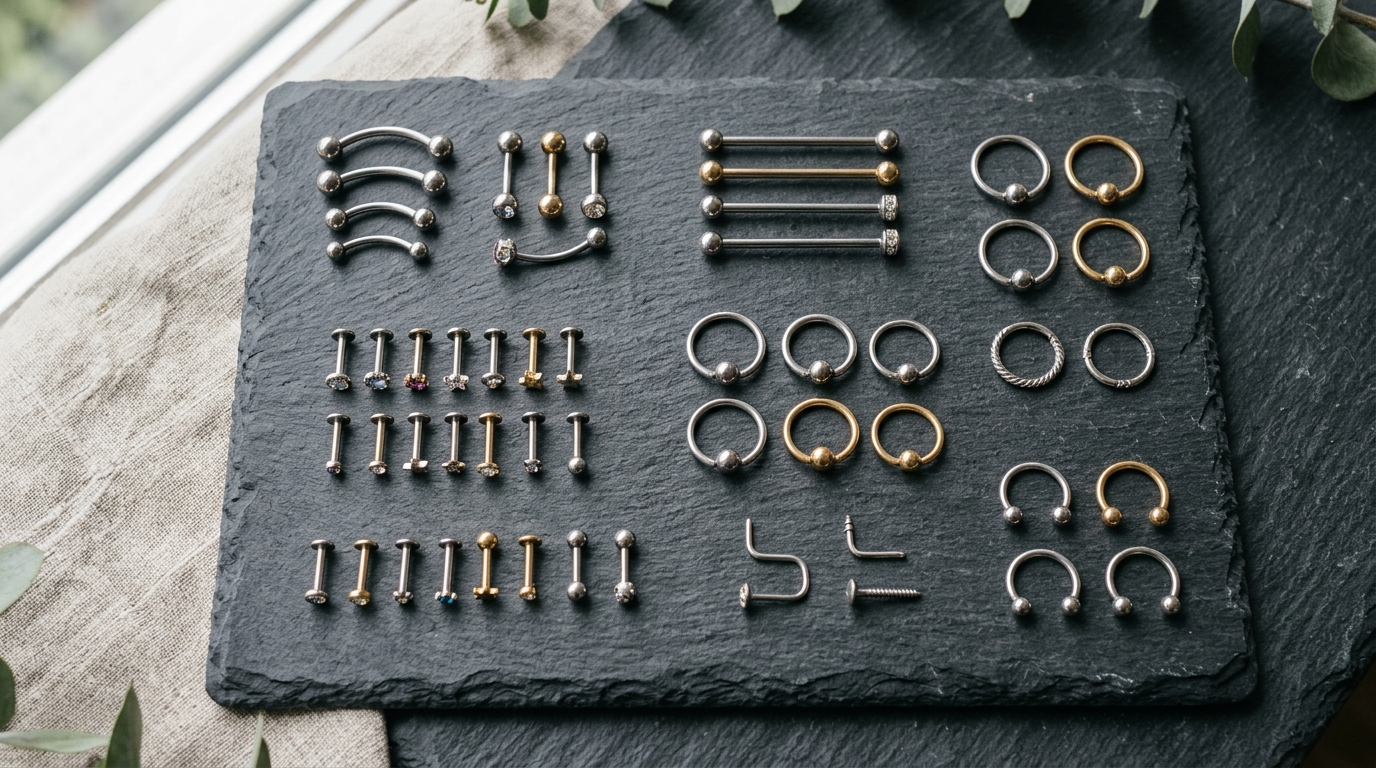
“Earring” is a broad term covering everything from fine ear wires to professionally fitted cartilage jewelry. These products do not follow one construction standard.
Conventional Fashion Earrings
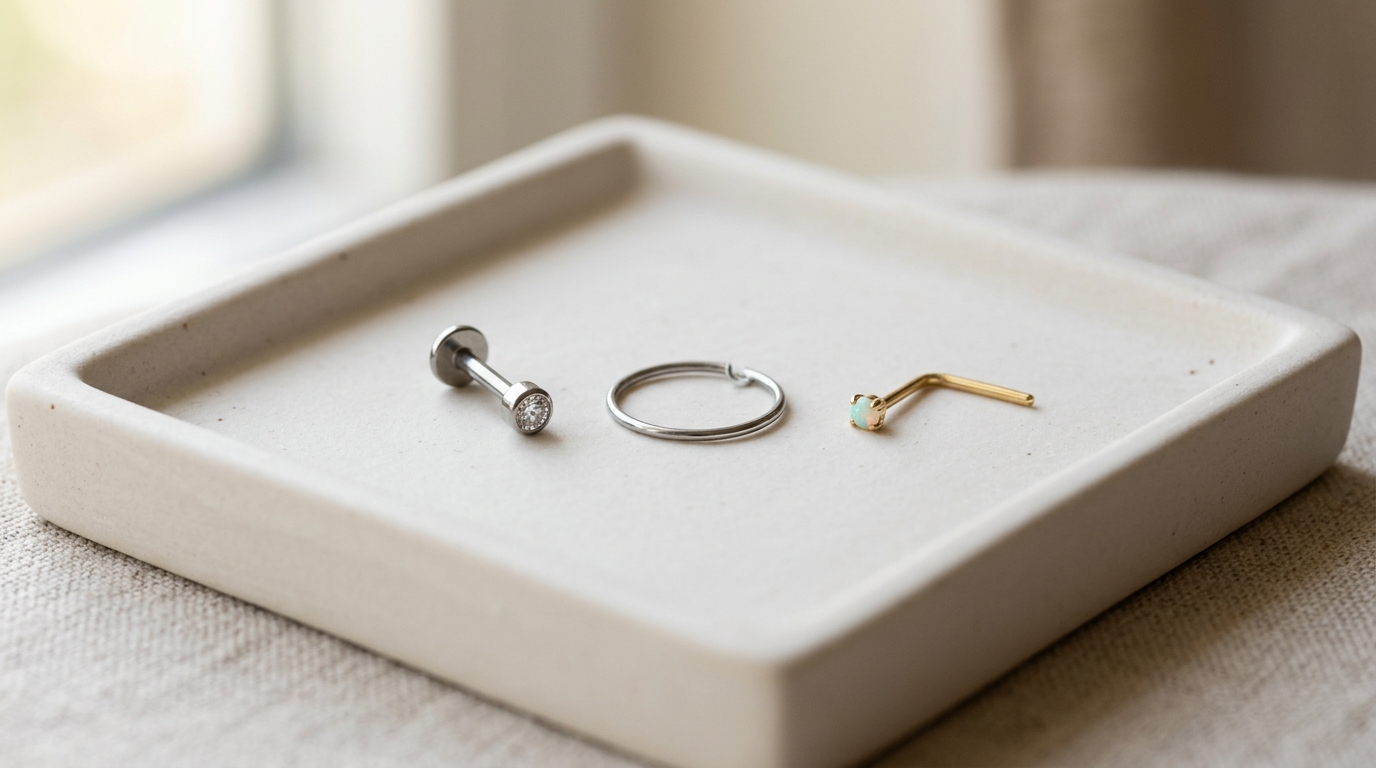
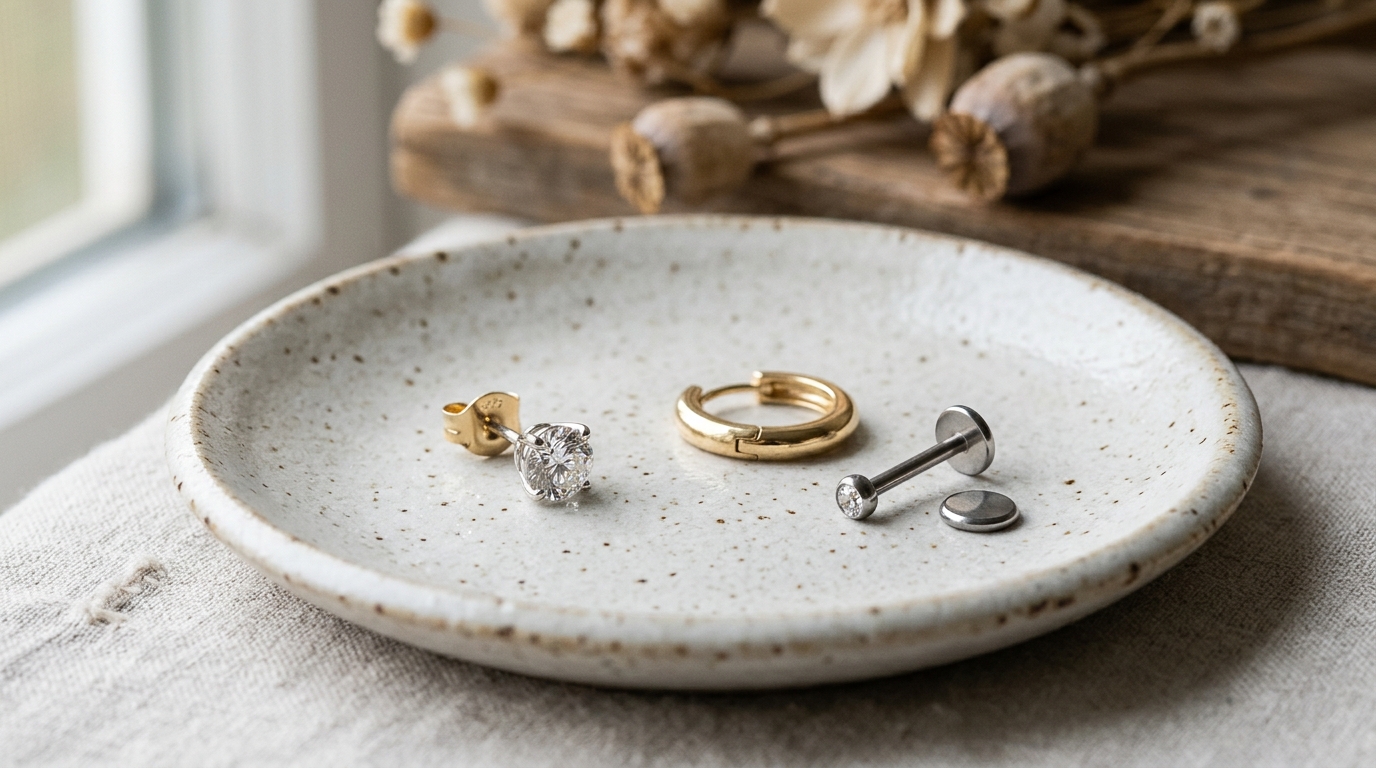
Traditional stud earrings frequently have a straight post with a butterfly, friction, or screw backing. The post is often around 20G, although thinner and thicker versions exist. French hooks and other ear wires may be approximately 22G or 20G. Handmade earrings can vary because wire thickness is chosen by the maker rather than a universal standard.
Professional Flat-Back Jewelry
Flat-back jewelry uses a straight post with a smooth disc behind the ear. The decorative end may be threadless (push-pin) or internally threaded. These posts are commonly found in 18G and 16G. The gauge, length, end style, and threading system must all be compatible. A decorative end made for one threading system may not fit another brand or post.
Rings and Clickers
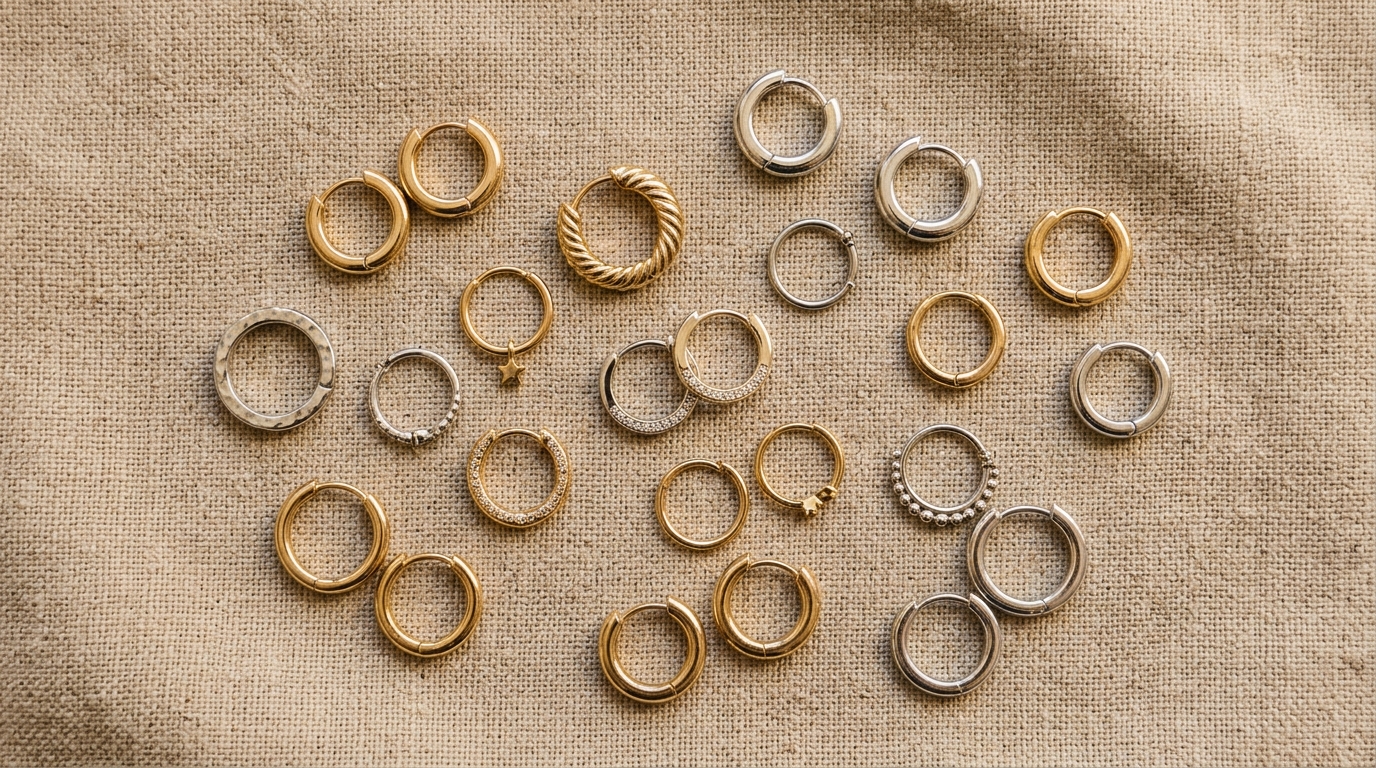
Hoops, seam rings, and hinged clickers also have a gauge measurement. Their second important measurement is internal diameter, which determines how closely the ring sits around the lobe or cartilage. A ring can have the correct post thickness but still be uncomfortable if its diameter is too small.
Gauge and Post Length Measure Different Things
Gauge describes the thickness of the post passing through the piercing. Post length describes the amount of straight jewelry available to sit through the tissue.
18G × 7 mm post
- • 18G identifies a post diameter of about 1.0 mm.
- • 7 mm identifies the wearable post length.
The length of a flat-back post is usually measured between the inner surface of the decorative end and the inner surface of the backing disc. Decorative tops and the thickness of the disc are not included in the wearable section.
A post that is too short can compress the tissue. A post that is too long may tilt, catch on hair, and move through the channel more than necessary. Fresh piercings may initially need extra length for swelling. Once swelling has settled, a piercer may recommend a shorter post. This is called downsizing and usually changes the length without changing the gauge.
How to Find Your Earring Gauge
A professional piercer can identify the gauge and determine whether the current jewelry fits correctly. This is the best option when the piercing is new, irritated, difficult to remove, or located in cartilage.
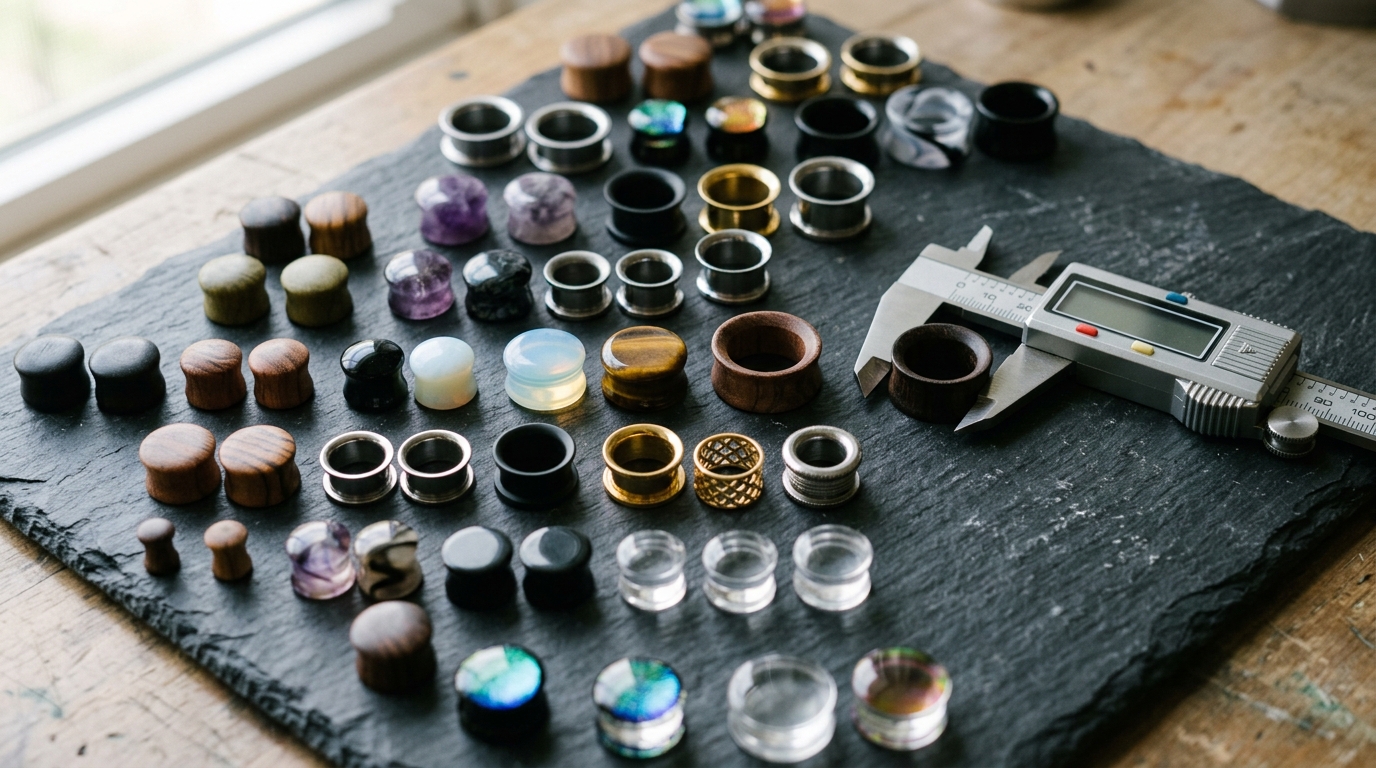
Measuring With a Digital Caliper
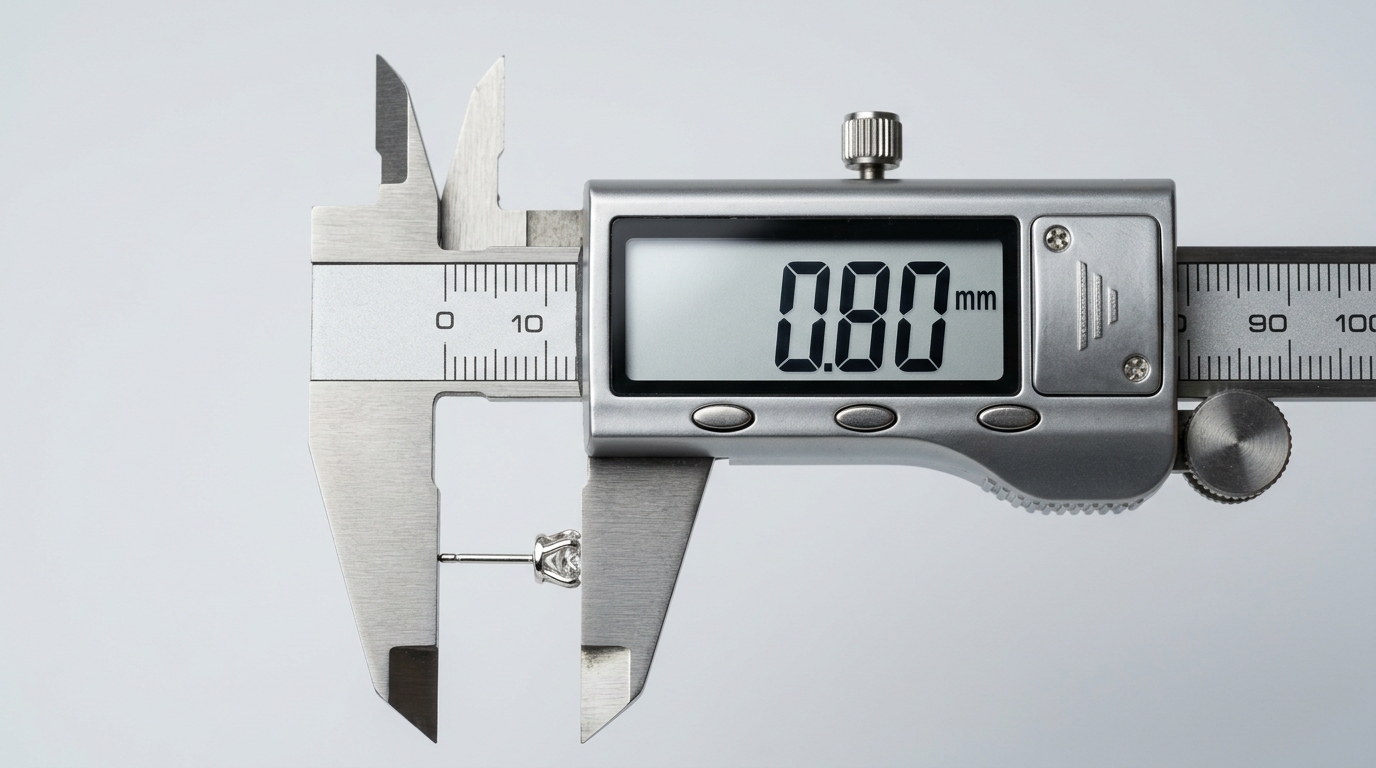
- Clean the jewelry and measuring tool.
- Place the caliper across the straight post.
- Avoid threaded sections, grooves, and decorative ends.
- Close the jaws gently without squeezing the metal.
- Read the measurement in millimeters.
- Compare the result with a gauge table.
Common results include:
- • Around 0.6 mm: 22G
- • Around 0.8 mm: 20G
- • Around 1.0 mm: 18G
- • Around 1.2 mm: 16G
A household ruler is not precise enough to distinguish reliably between neighboring small gauges.
18G vs. 20G Earrings
An 18G post is approximately 1.0 mm thick. A 20G post is about 0.8 mm thick.
If a piercing comfortably wears 18G jewelry, a 20G earring may also enter because it is thinner. Over time, however, the channel may tighten around the smaller post. Returning to 18G could then require professional assistance.
An 18G post should not be pushed into a channel that currently fits only 20G. The thicker post may act as an unplanned stretch. Resistance, sharp pain, or bleeding means you should stop.
Choosing a Gauge for Lobe Piercings
Healed lobe piercings commonly accommodate jewelry between 22G and 18G. Professionally placed lobes may also use 16G, particularly when body-jewelry posts are selected.
Instead of choosing by a general recommendation, consider:
- The gauge used for the original piercing
- The thickness of current comfortable jewelry
- Whether the channel has tightened over time
- The earring’s weight and pull on the lobe
- Post length and backing style
- Any history of tearing or elongation
- Whether the piercing is fully healed
A thin post is not automatically more comfortable. If a heavy earring hangs from a very thin post, its weight is concentrated over a narrow section of tissue. This can contribute to downward stretching or an elongated opening over time. Large or heavy earrings should be worn thoughtfully.
Gauge Choices for Cartilage Earrings
Cartilage placements such as the helix, tragus, flat, and conch often use 18G or 16G professional jewelry. The appropriate size depends on the specific placement, anatomy, angle, and jewelry design.
A conventional thin earring may fit through some healed cartilage piercings, but its backing or length may not be suitable. Butterfly backs can occupy extra space behind the ear and may press against nearby anatomy. Long fashion posts can also catch on hair or clothing. Flat-back posts are often selected for cartilage because the disc has a low profile.
Butterfly Backs, Flat Backs, and Other Closures
The closure changes how the earring sits and how much usable space remains on the post:
Butterfly Backs
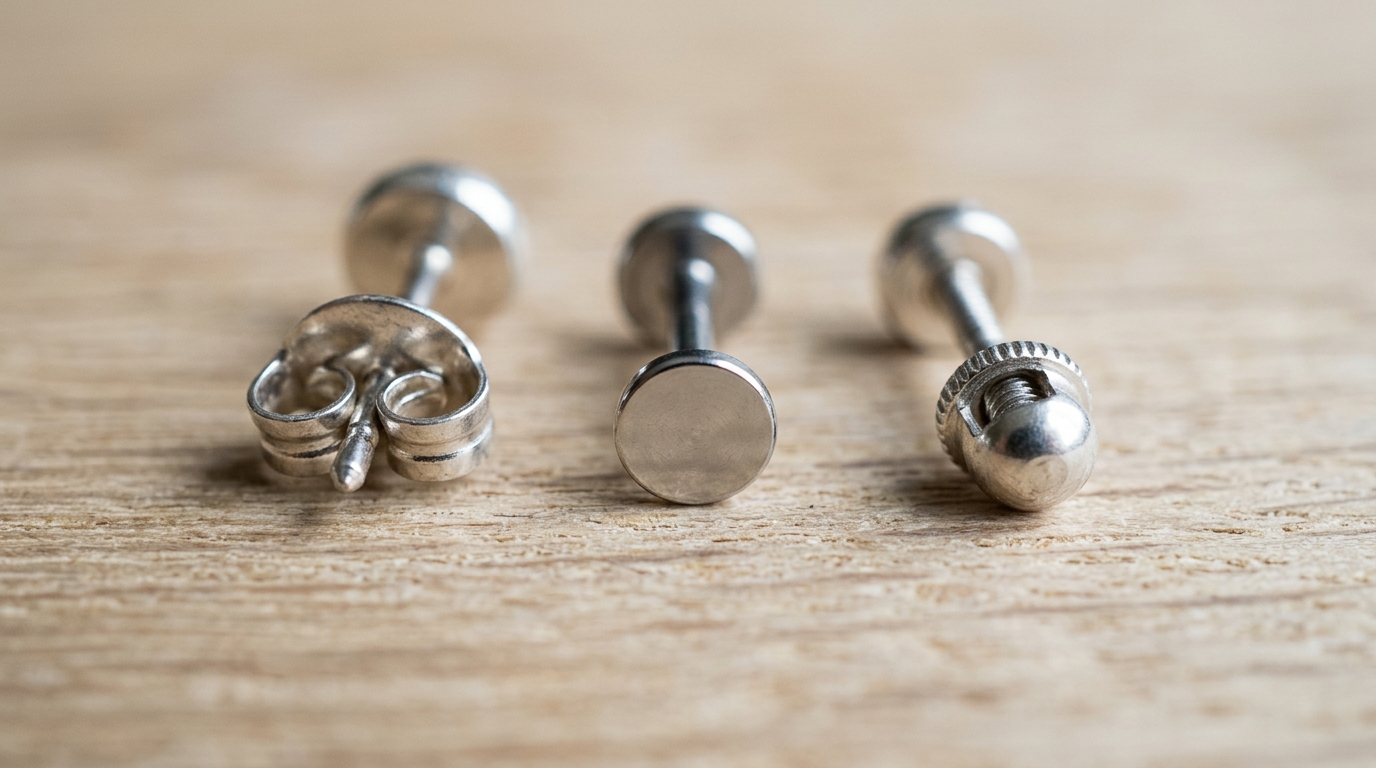
A butterfly back slides onto a grooved post. It is familiar and easy to use, but pushing it too tightly can compress the lobe. The grooves and backing can also collect residue if they are not cleaned appropriately. Leave enough room for the tissue without allowing the backing to fall off.
Flat Backs
A flat-back post ends in a smooth disc. It may connect to the front with internal threading or a threadless pin. The low-profile backing can be comfortable for sleeping and may reduce snagging, provided the post length is correct.
Screw Backs
Fine-jewelry studs sometimes use a threaded post and screw-on backing. The usable length depends on where the backing rests, and exposed threads may feel different during insertion.
Hoops and Huggies
Hoops use internal diameter instead of post length as their second measurement. A close-fitting huggie needs enough room to avoid compressing the lobe or cartilage. Closure type does not determine gauge; thickness must be checked separately.
What Happens if the Gauge Is Too Thin?
A thinner earring may feel loose in a larger established channel. The piercing can gradually contract around it if the smaller jewelry is worn continuously.
Heavy earrings with thin posts can place concentrated pressure along the lower edge of the channel. Over time, this may lengthen the hole or thin the tissue. Movement also matters: a thin, loose post can shift inside a wider channel, particularly when combined with a heavy decorative front.
What if the Post Feels Too Thick?
Do not force it. A post may feel too thick because:
- • It is a lower gauge number than the existing jewelry.
- • The piercing has tightened after being left empty.
- • The channel has contracted around a thinner post.
- • The angle of insertion is incorrect.
- • The piercing is irritated or swollen.
- • Scar tissue is creating resistance.
Repeated attempts can scratch or tear the channel. A piercer may be able to assess whether the original size can be restored with an insertion taper or whether a smaller post should be worn temporarily.
Material and Surface Quality
Correct sizing cannot make unsuitable metal safe or comfortable.
For healing piercings, jewelry should be made from documented body-compatible material and have a smooth, highly polished wearable surface. Professional options may include verified implant-grade titanium (ASTM F136), biocompatible steel (ASTM F138), niobium, or suitable solid gold.
The label “hypoallergenic” does not identify a precise material standard. People sensitive to nickel should check the actual alloy or obtain jewelry through a reputable piercing studio.
Earring-Sizing Questions
What gauge are normal earrings?
Many conventional stud earrings use posts around 20G, or approximately 0.8 mm. Thin ear wires may be 22G, while some professional lobe jewelry is 18G or 16G. There is no universal size shared by every earring.
Is 18G thicker than 20G?
Yes. An 18G post is approximately 1.0 mm thick, while 20G is approximately 0.8 mm. Gauge numbers decrease as jewelry becomes thicker.
What gauge are butterfly-back earrings?
Butterfly-back earrings are often around 20G, but the backing style does not guarantee a particular gauge. The exact post thickness depends on the manufacturer and should be measured or confirmed in the product specifications.
What gauge are flat-back earrings?
Professional flat-back earrings are frequently sold in 18G and 16G, although other sizes exist. Check the post gauge, wearable length, and connection type before purchasing.
Can I wear regular earrings in a 16G piercing?
A thinner conventional earring may pass through a healed 16G channel, but the piercing may shrink around it over time. The post length, backing, weight, and material must also be suitable for the placement.
How can I tell if my earring post is too short?
A short post may press the front or backing into the tissue, leave deep marks, or provide no room for swelling. Jewelry that begins sinking into the skin requires prompt professional assessment.
Why does my earring feel loose?
The post may be thinner than the established channel, the wearable length may be excessive, or the backing may not be positioned correctly. A piercer can measure the current channel and recommend a more stable fit.
Match the Post to the Piercing
The right earring gauge is the thickness that fits the established channel without force, excessive movement, or concentrated pressure. Conventional earrings are commonly around 20G, while professional lobe and cartilage jewelry may be 18G or 16G. Confirm the post diameter, usable length, closure, weight, and material before treating any size as the right one.
Technical Measurement & Sizing Specialists
Gauge to MM provides calibrated measurement conversion charts and calculation standards for electrical, manufacturing, and body jewelry dimensions.