Table of Contents ▾
The most common standard nose piercing gauge for a nostril is 18G or 20G. An 18G post is approximately 1.0 mm thick, while 20G measures about 0.8 mm. Some professional piercers use 16G, or 1.2 mm, depending on the placement, jewelry style, anatomy, and desired stability.
There is no universal size that fits every nose. Gauge describes only the thickness of the jewelry passing through the piercing. A correct fit also depends on post length for a stud or internal diameter for a hoop.
Septum piercings use a different range and should not be grouped automatically with nostril jewelry. Before ordering a replacement, identify the placement, gauge, post length or ring diameter, and jewelry style. A professional piercer can confirm these measurements without relying on a generic “standard” label.
What “Standard” Means for a Nose Piercing
In retail listings, “standard” usually means a size that is commonly sold or frequently used. It does not mean every professional piercer creates the same channel or that the jewelry will fit every anatomy.
For nostril piercings, the most familiar sizes are:
| Gauge | Approximate Thickness | Typical Context |
|---|---|---|
| 20G | 0.8 mm | Common healed-nostril jewelry & delicate retail hoops |
| 18G | 1.0 mm | Standard professional nostril initial piercing size |
| 16G | 1.2 mm | Used for selected placements, stability, and thicker anatomy |
The gauge scale works in reverse. An 18G post is thicker than a 20G post, while 16G is thicker than both.
A piercer may select a size based on the tissue, placement angle, intended jewelry, healing needs, and long-term stability. The size currently in your piercing is more useful than a retailer’s default recommendation.
18G vs. 20G Nose Jewelry
The physical difference between 18G and 20G is approximately 0.2 mm. That sounds minor, but it can affect how the jewelry enters and how the piercing channel behaves.
18G Nose Jewelry
An 18G post measures about 1.0 mm in thickness. It is widely used for professionally placed nostril piercings and is available in flat-back studs, nostril screws, L-bends, and rings. The slightly thicker post may offer more stability than very thin jewelry, although suitability still depends on placement and anatomy.
20G Nose Jewelry
A 20G post is approximately 0.8 mm thick. It is common in retail nose studs and delicate hoops, particularly for established nostril piercings. If an 18G piercing is left with thinner 20G jewelry, the channel may gradually tighten around it. That does not always cause a problem, but returning to 18G later may be difficult if the piercing has shrunk.
Can They Be Swapped?
A 20G piece may enter an established 18G channel because it is thinner. An 18G piece should not be forced into a channel that has tightened to 20G.
If thicker jewelry does not slide in comfortably, stop. A piercer may be able to evaluate the channel and insert correctly sized jewelry with appropriate tools. Pushing through resistance can tear the tissue and cause swelling or bleeding.
Gauge Is Not the Same as Jewelry Fit
A product labeled “18G nose ring” provides only one measurement. It tells you that the part passing through the piercing is approximately 1 mm thick.
For a stud, you must also know the wearable post length. For a ring, you need the internal diameter.
18G × 7 mm labret
- • 18G is the post thickness (~1.0 mm).
- • 7 mm is the wearable post length between disc and top.
20G × 8 mm ring
- • 20G is the wire thickness (~0.8 mm).
- • 8 mm is the internal diameter of the ring.
Confusing these measurements can result in correctly gauged jewelry that still presses painfully into tissue, hangs too low, or sits at an awkward angle.
Sizing Nose Studs
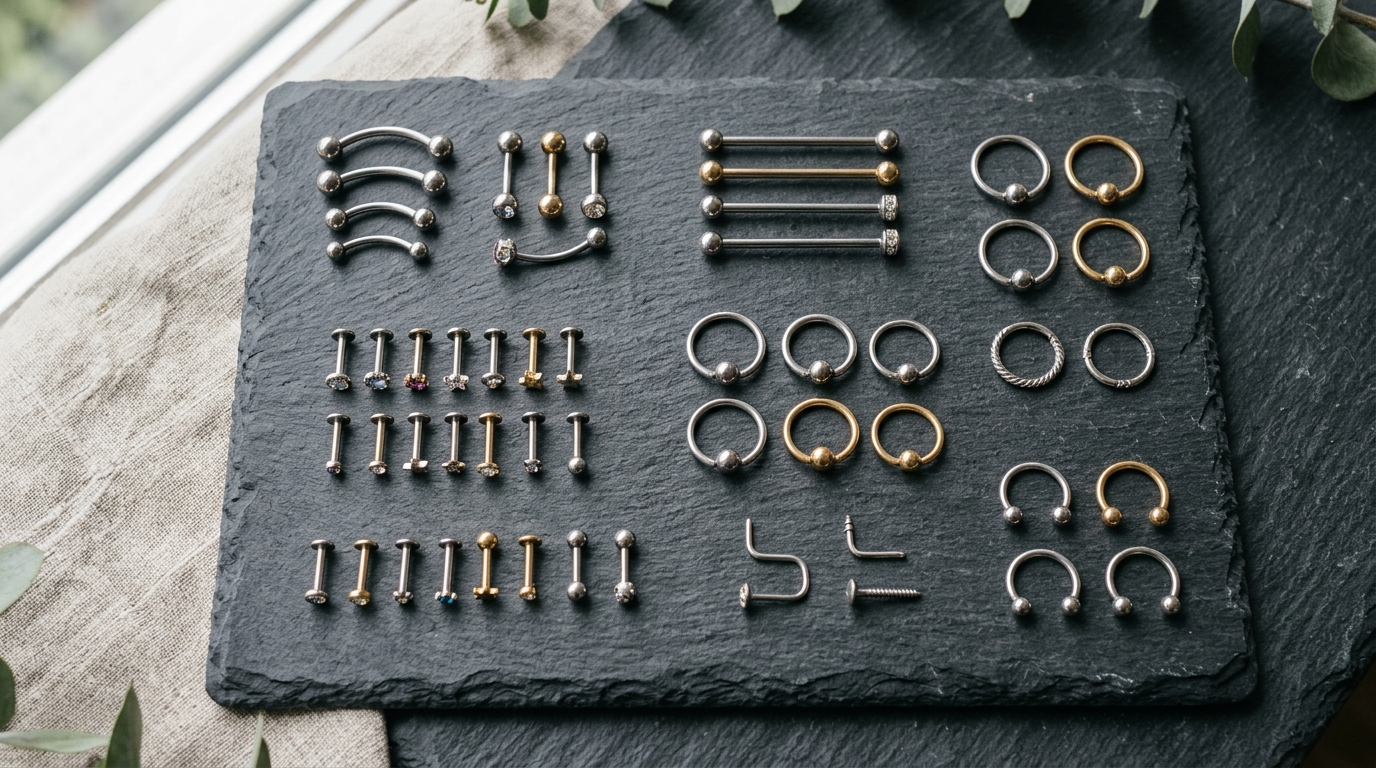
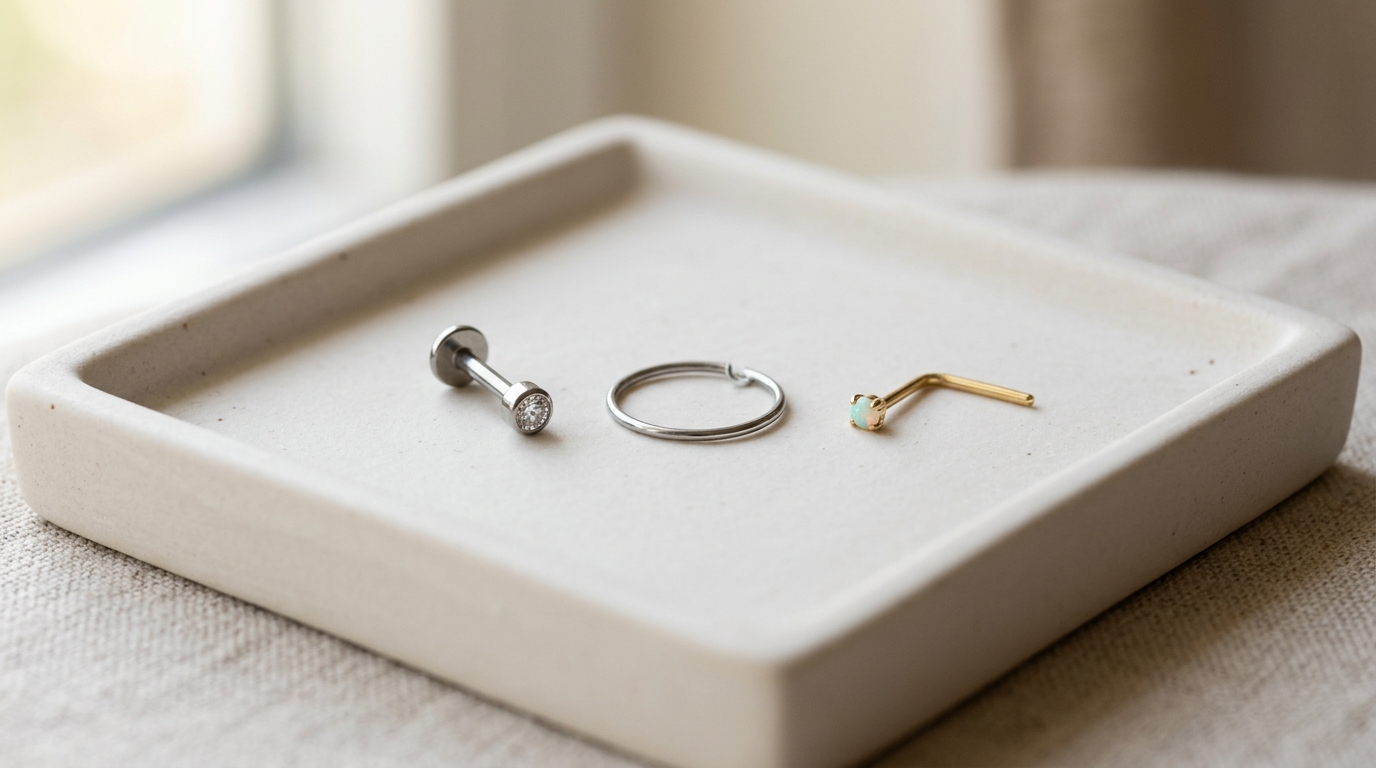
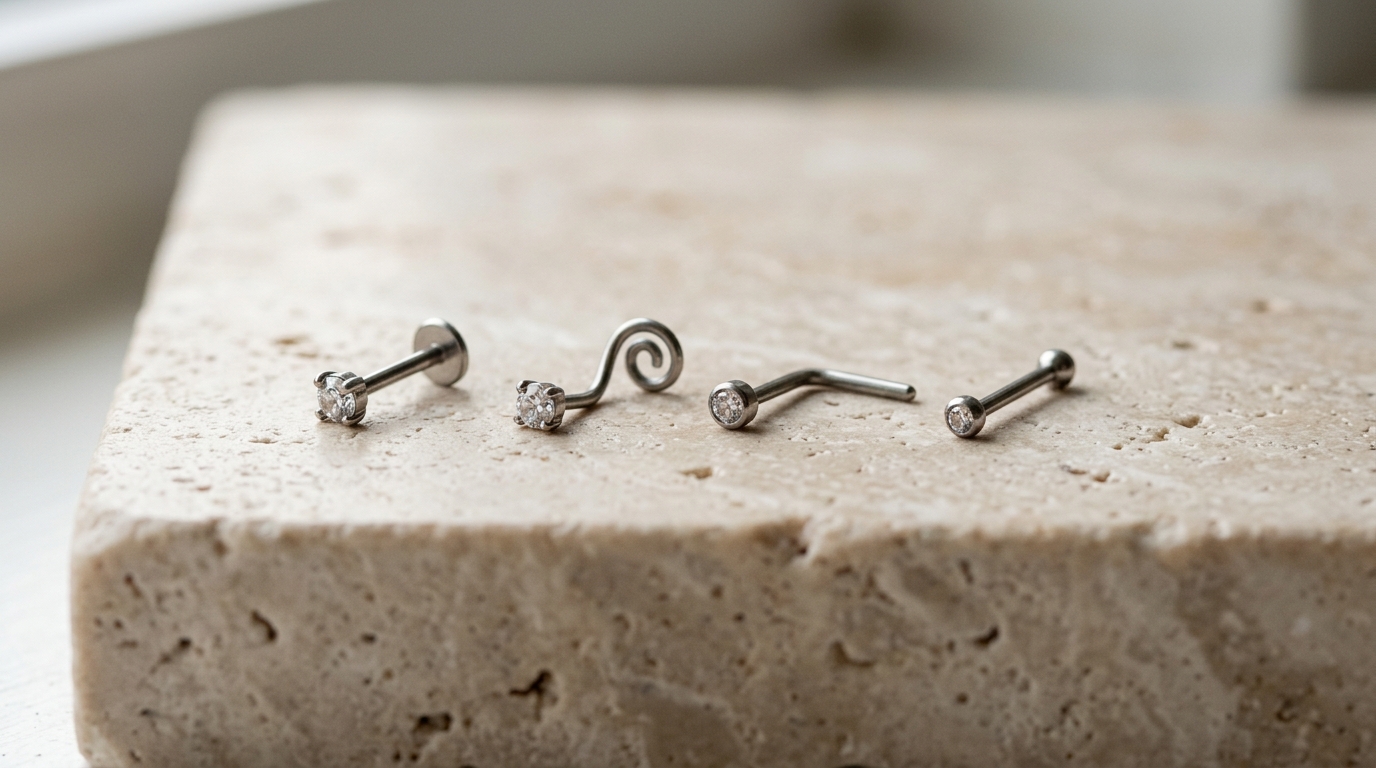
A nose stud passes through the nostril and is retained by a backing, bend, curve, or enlarged end. Each design fits differently.
Flat-Back Labret Studs
A flat-back labret has a smooth disc inside the nostril and a decorative or plain end outside. The post may be threadless (push-pin) or internally threaded. Its wearable length is measured between the underside of the decorative end and the inner flat disc.
Initial jewelry may be longer (e.g., 8 mm) to accommodate swelling. Once swelling has settled, a piercer may replace it with a shorter post (e.g., 6 mm or 7 mm) to reduce movement and snagging.
Nostril Screws
A nostril screw has a curved section inside the nose. Its fit depends on the curve, wearable length, and the wearer’s anatomy. A screw shaped for one person may stick out or rotate in another nose. Professional piercers can adjust certain screw-style pieces for a more individual fit.
L-Bend Studs
An L-bend has a straight wearable section followed by a right-angle bend. It is easy to identify and put in, but may rotate or fall out during sleep or face washing if the dimensions do not suit the piercing. The relevant measurements include post thickness, straight wearable length, and the bend’s shape.
Nose Bones
A nose bone has a small enlarged ball end that passes through the piercing and helps retain the jewelry. That end is wider than the post. Because insertion and removal require the channel to stretch over the enlarged tip, this design may be uncomfortable or unsuitable for a fresh, tight, or unstable piercing. Ask a piercer whether it is appropriate for your healed nostril.
Finding the Right Hoop Diameter
The diameter of a nose hoop is measured across the inside of the ring (internal diameter). It is completely separate from the gauge thickness.
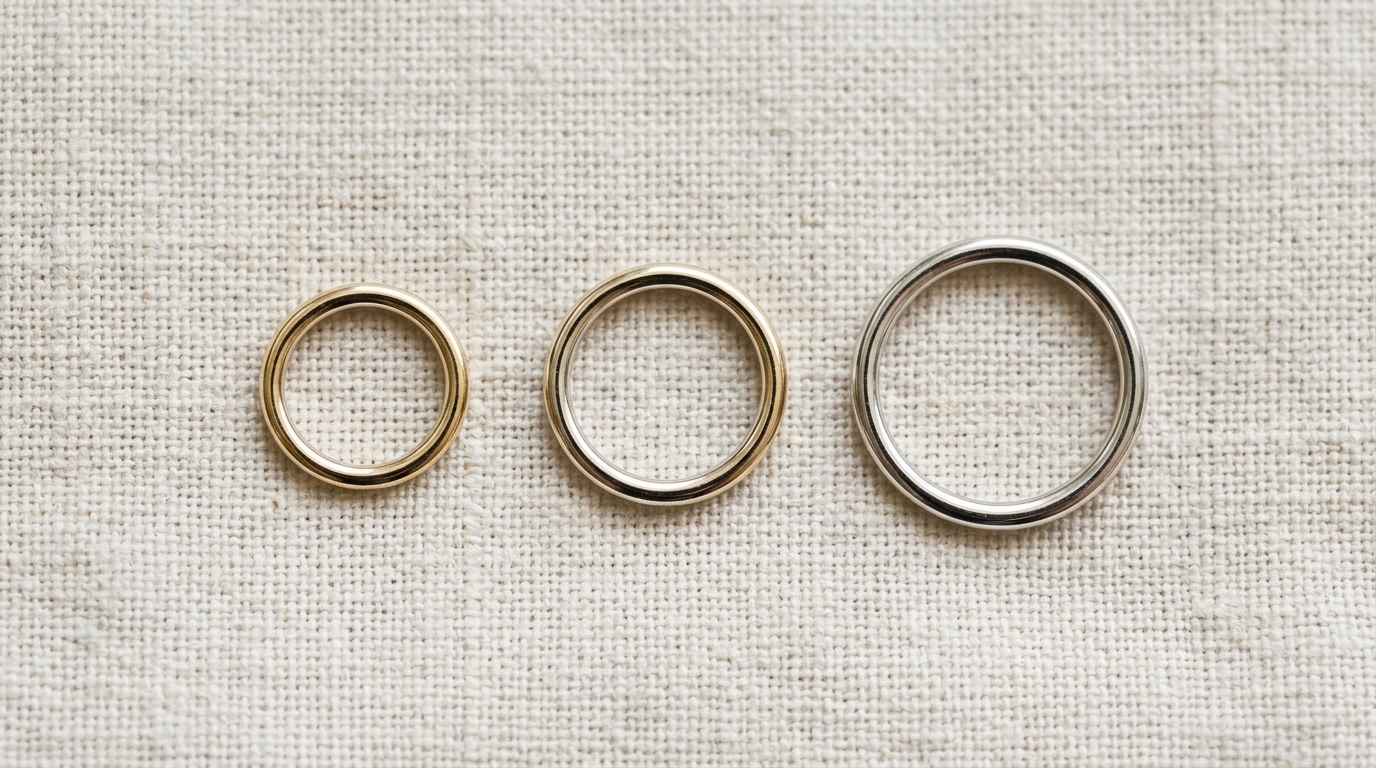
Common retail diameters range from approximately 6 mm to 10 mm, but this is not a one-size-fits-all prescription. The required diameter depends on:
- Distance from the piercing channel to the nostril rim
- Nostril curvature and tissue thickness
- Piercing angle through the nostril
- Jewelry wire thickness (gauge)
- Whether a snug or relaxed fit is desired
- Extra space needed to avoid continuous pressure on tissue
A ring that is too small may pull downward or cut into the nostril edge. It can create constant tension even when it appears attractively snug. A ring that is too large may hang low, rotate excessively, and catch on towels, clothing, or hands.
Studs and Hoops During Healing
A new nostril piercing needs jewelry selected for healing, not merely for appearance. The piece must accommodate expected swelling while limiting unnecessary movement and trauma.
A properly fitted stud (especially a flat-back labret) is often easier to stabilize than a close-fitting hoop because a ring moves constantly through the channel and changes the direction of pressure as it rotates. However, jewelry choice remains a professional decision based on placement, anatomy, and technique.
Do not switch to a hoop simply because the outside looks healed. Piercings can appear calm on the surface months before the internal fistula is mature enough for curved jewelry.
Is Septum Jewelry the Same Size?
No. Nostril and septum piercings are different anatomical placements with completely different sizing standards.
A septum piercing is commonly fitted with 16G or 14G jewelry:
| Septum Gauge | Approximate Thickness |
|---|---|
| 16G | 1.2 mm |
| 14G | 1.6 mm |
Other sizes may be used depending on anatomy, professional judgment, or intentional stretching. Ring diameter also affects how low the jewelry hangs and whether it can be flipped inside the nose. Do not assume an 18G or 20G nostril ring is suitable for a septum piercing.
Measuring Existing Nose Jewelry
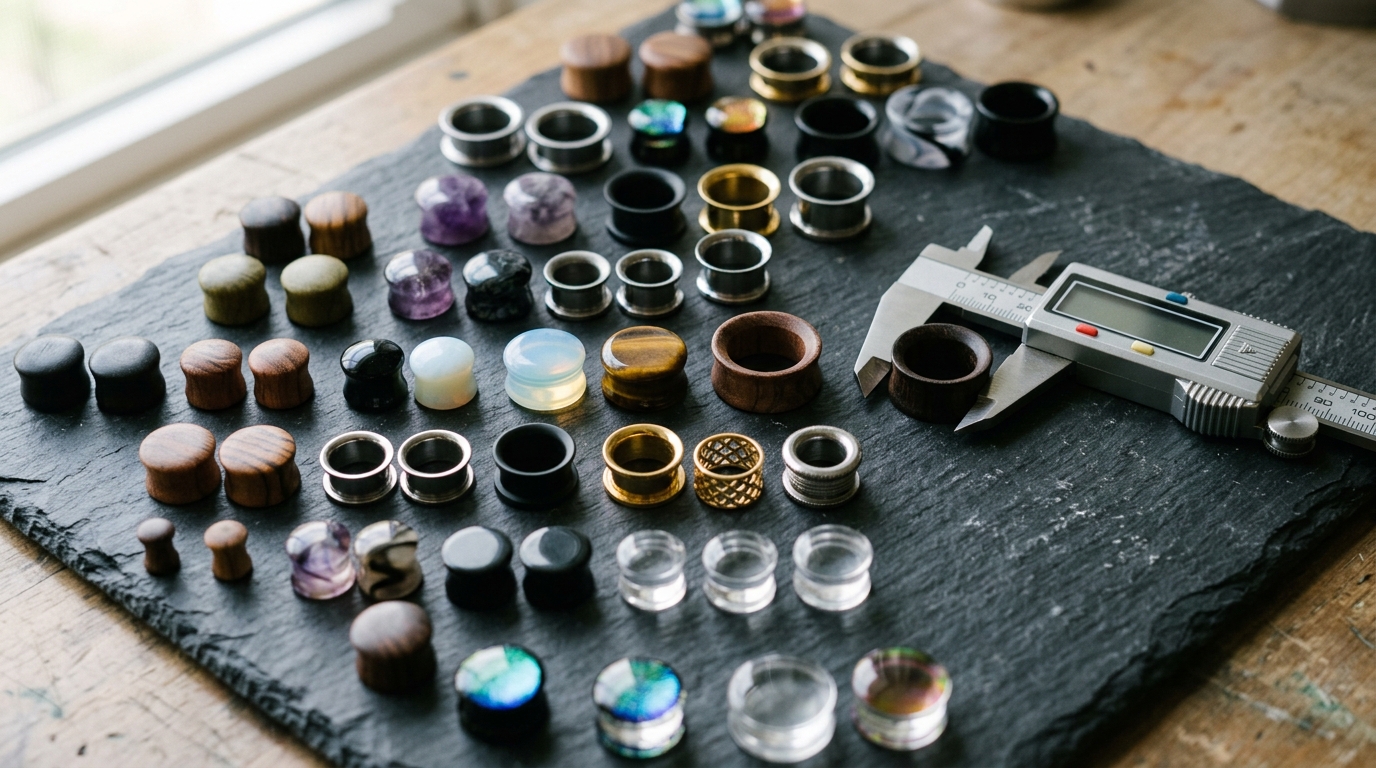
Small differences of 0.2 mm are difficult to read with a household ruler. A clean digital caliper can measure post thickness, wearable length, and ring diameter with true precision.
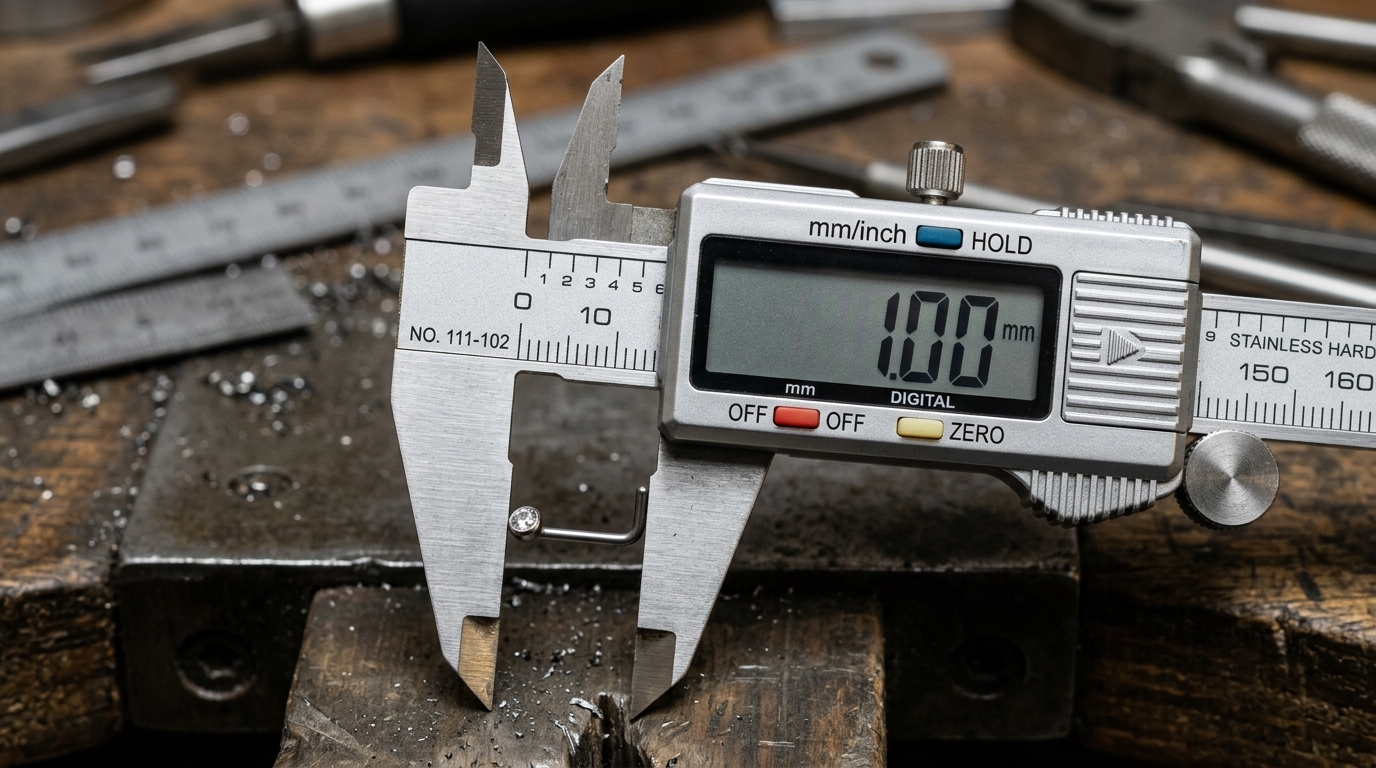
How to Measure a Stud:
- Measure across the post to identify its thickness (gauge).
- Measure only the straight wearable portion sitting through tissue.
- Exclude decorative tops, bends, and backing discs from the length.
How to Measure a Ring:
- Measure the wire thickness for the gauge.
- Measure straight across the empty interior for internal diameter.
- Do not include the outside edges or wire thickness.
Do not remove jewelry from a fresh, irritated, or uncertain piercing only to measure it. Nose piercings can tighten within minutes, and reinsertion may be difficult or painful.
Recognizing an Incorrect Fit
Gauge, length, or diameter can each create distinct problems:
- A stud is too short if: The end or backing presses firmly into the tissue, the jewelry begins sinking into the skin, there is no room for swelling, or deep indentation marks remain.
- A stud is too long if: It moves back and forth excessively, protrudes far inside the nostril, catches frequently on towels or clothing, or repeatedly tilts.
- A hoop is too small if: It pulls the piercing downward toward the nostril rim, leaves a cutting notch or indentation, causes persistent tenderness, or cannot sit flush.
Persistent pain, worsening swelling, heat, spreading redness, unusual discharge, or fever requires appropriate medical assessment. Do not remove jewelry from a potentially infected piercing without medical advice, as closing the surface can trap drainage.
Materials and Construction
Correct dimensions cannot compensate for low-quality material or rough construction.
Suitable jewelry materials include documented implant-grade titanium (ASTM F136), specific biocompatible steel grades (ASTM F138), niobium, or verified solid gold (14k or 18k). Implant-grade titanium is frequently chosen when nickel sensitivity or low weight is a concern.
The part passing through tissue should be smooth and free from scratches, burrs, plating damage, and exposed external threads. Threadless push-pin or internally threaded designs keep the wearable post perfectly smooth during insertion and removal.
Nose Jewelry Questions
What is the standard nose piercing gauge?
For nostril piercings, 18G and 20G are the most commonly encountered sizes. Some piercers use 16G. There is no universal standard because jewelry selection depends on anatomy, placement, healing needs, and professional preference.
Is 18G or 20G better for a nose piercing?
Neither is automatically better for every person. An 18G post is thicker and commonly used professionally, while 20G is widely available for delicate healed-nostril jewelry. The correct choice is the gauge at which your piercing was created or safely fitted.
Can I use an earring in a nose piercing?
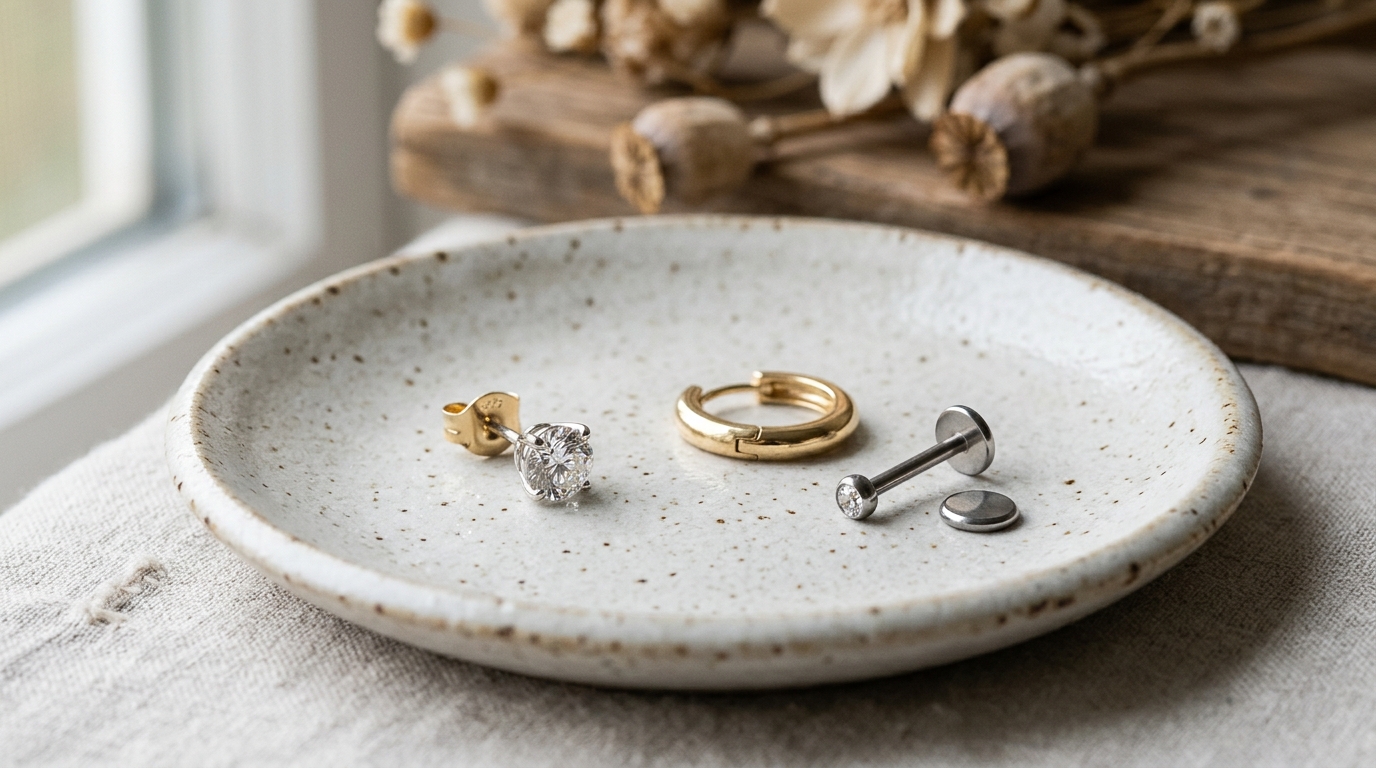
A conventional earring may have the wrong gauge, length, backing, material, or finish. Butterfly backs can trap buildup and may not fit comfortably inside the nostril. Use jewelry specifically fitted for the piercing.
What size nose hoop should I buy?
You need both gauge and internal diameter. Diameter depends on the distance from the piercing to the nostril edge, tissue thickness, piercing angle, and desired fit. Measuring your current ring or visiting a piercer is more reliable than choosing a generic diameter.
Why does my nose stud stick out?
The post may be too long, the bend may not match your anatomy, or the jewelry may be rotating. Initial posts are sometimes intentionally longer for swelling. Ask a piercer whether professional downsizing is appropriate.
When can I change a nose stud to a hoop?
Change it only after the piercing is fully healed and stable, preferably with a piercer’s assessment. The outside can look settled before the inner channel is ready. Changing too early may cause irritation and prolong healing.
What gauge is a septum piercing?
Many septum piercings use 16G or 14G jewelry, but the actual size varies. A septum gauge should be confirmed separately rather than inferred from common nostril sizes.
Confirm More Than the Gauge
The most common standard nose piercing gauge is 18G or 20G for a nostril, with 16G also used in some cases. Before purchasing jewelry, confirm the gauge, post length or hoop diameter, style, material, and placement. A professional measurement is the safest option when the current size or healing status is uncertain.
Technical Measurement & Sizing Specialists
Gauge to MM provides calibrated measurement conversion charts and calculation standards for electrical, manufacturing, and body jewelry dimensions.