Table of Contents ▾
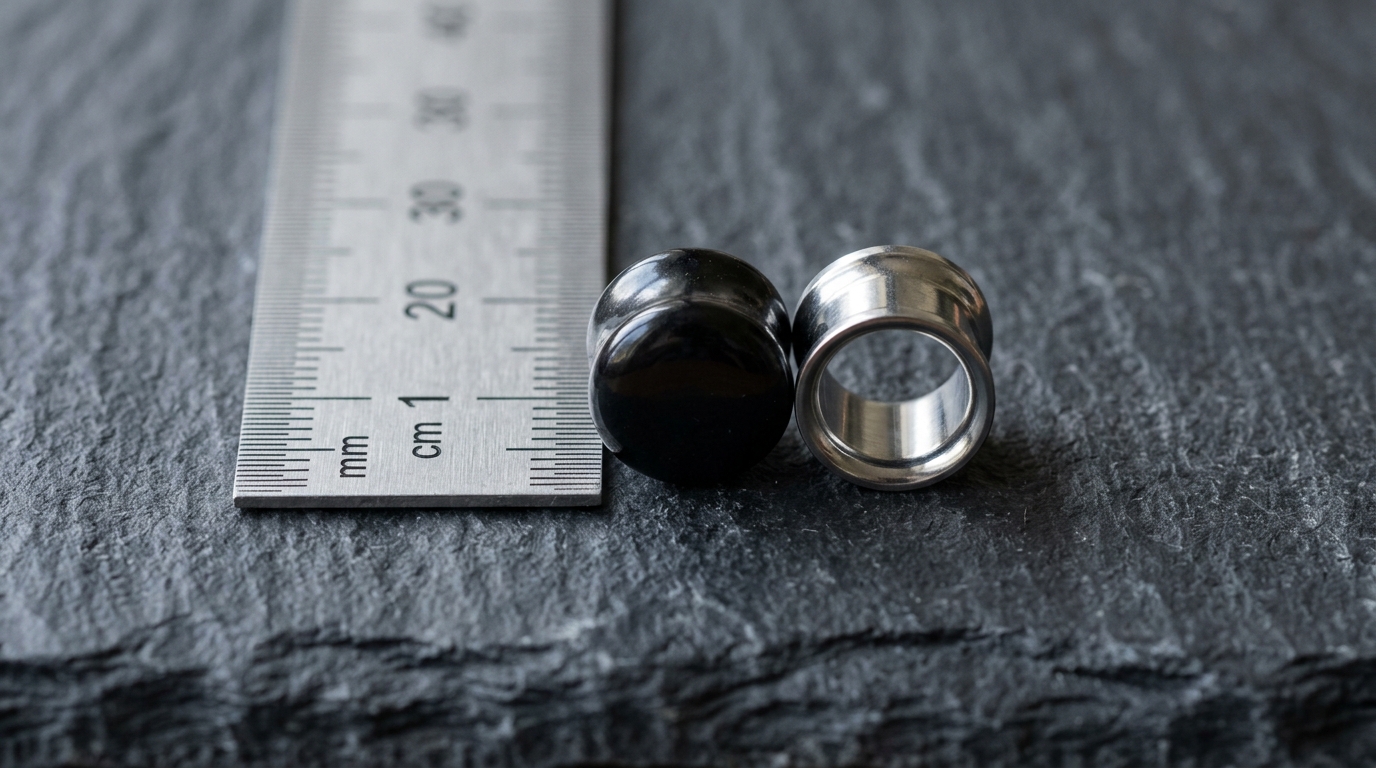
The exact nominal conversion for 0G in mm is 8 millimeters. In inches, 8 mm equals approximately 0.315 inch, making 5/16 inch the closest familiar fractional comparison. This measurement describes the diameter of the jewelry section worn inside the piercing, not necessarily the wider flare or decorative face.
Knowing the conversion is important when buying plugs or tunnels from a seller that lists products in a different measurement system. It also helps distinguish 0G from neighboring sizes. A typical 2G piece is about 6 mm, an optional 1G size is about 7 mm, and 00G may be sold as either 9 or 10 mm.
The label is only the beginning. Flare size, wearable length, jewelry style, material, and manufacturing tolerance can all change how an 0G piece fits.
The Exact 0G Conversion
Here are the key measurements across common measurement systems:
| Measurement System | 0G Equivalent |
|---|---|
| Gauge | 0G |
| Millimeters | 8 mm |
| Decimal Inches | 0.31496 in |
| Rounded Inches | 0.315 in |
| Closest Common Fraction | Approximately 5/16 in |
The mathematical conversion is based on the fact that one inch equals 25.4 mm:
Five-sixteenths of an inch equals 0.3125 inch, which is slightly smaller than 8 mm. The difference is only about 0.0025 inch, so retailers often use 5/16 inch as a convenient comparison rather than an exact equivalent.
When accuracy matters, shop by the stated 8 mm diameter instead of relying on the fractional label.
Why 0G Is Written With a Zero
Gauge numbers work in reverse. Lower numbers represent thicker jewelry, so 0G is larger than 2G even though zero would normally suggest a smaller amount.
The sequence near 0G commonly looks like this:
| Label | Nominal Diameter | Difference From Previous Size |
|---|---|---|
| 2G | 6 mm | Not applicable |
| 1G (half size) | 7 mm | 1 mm |
| 0G | 8 mm | 1 mm |
| 00G | 9 or 10 mm | 1 or 2 mm |
The optional 1G size is useful because the widely sold jump from 2G to 0G moves from approximately 6 mm to 8 mm. That is a 2 mm increase, which is larger than many earlier steps in the gauge sequence.
The next label, 00G, is larger than 0G. Adding another zero does not mean a smaller diameter in this system.
What the 8 MM Measurement Actually Describes
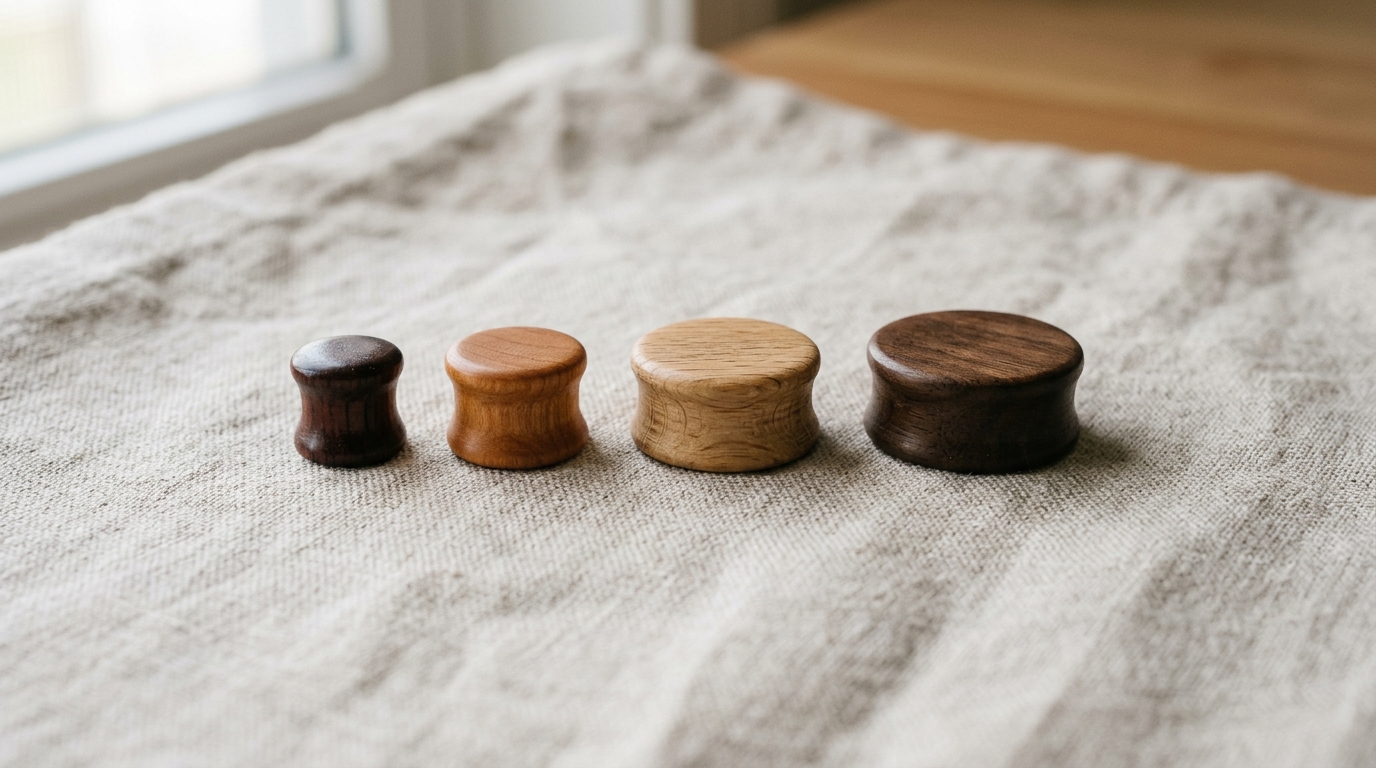
An 8 mm size normally refers to the outside diameter of the wearable shaft that sits inside the piercing channel. It does not automatically describe every visible part of the jewelry.
A plug or tunnel can have several separate dimensions:
- Wearable diameter: The thickness of the section inside the piercing channel.
- Flare diameter: The widest outer edge that helps retain the jewelry in place.
- Wearable length: The distance available for the thickness of the earlobe.
- Face diameter: The visible decorative front surface.
- Tunnel opening: The empty interior opening of a hollow piece.
An 0G tunnel has an 8 mm outside wearable diameter, but the opening through its center will be smaller because the tunnel walls take up space.
Similarly, an 0G double-flare plug may have an 8 mm wearable center with flares measuring 9 mm or more. The piercing must be flexible enough to pass over that wider edge during insertion.
This distinction explains why a piece marked 0G can feel larger than expected even when its wearable center is correctly sized.
0G Compared With 00G
The difference between 0G and 00G is a common source of ordering mistakes.
0G has a dependable nominal value of 8 mm. The 00G label is less consistent. Some manufacturers use 9 mm, while many use 10 mm.
This means the change from 0G to 00G could be:
- 8 mm to 9 mm: A manageable 1 mm increase.
- 8 mm to 10 mm: A significant 2 mm increase that places much higher strain on lobe tissue.
A product page that says only “00G” does not provide enough information. Check the metric measurement before purchasing. If no millimeter value is shown, ask the seller rather than assuming the size.
The inch comparisons also differ:
- • 0G at 8 mm is approximately 5/16 inch.
- • 00G at 9 mm is approximately 0.354 inch.
- • 00G at 10 mm is approximately 3/8 inch.
An 0G piece cannot be treated as interchangeable with either version of 00G.
Why Two 0G Plugs May Fit Differently
A size label represents a nominal measurement, and real products can vary slightly. Material, manufacturing process, polish, coating, and quality control may affect the finished diameter.
A calibrated 8 mm glass plug from one manufacturer may fit differently from a low-cost acrylic or stone piece labeled 0G. Natural materials can also vary because they are shaped and polished individually.
Fit differences may come from other dimensions rather than the gauge itself:
- One plug may have a longer wearable section.
- A double flare may be wider or steeper.
- A tunnel may have a broad decorative rim.
- An O-ring groove may reduce usable wearable space.
- A saddle plug may have a curved wearable area.
- A heavy design may pull differently on the lobe.
For these reasons, compare full product specifications instead of shopping by gauge label alone.
Selecting an 0G Plug Style
The retention style changes how the jewelry is inserted and how it sits in the lobe.
Single-Flare Plugs
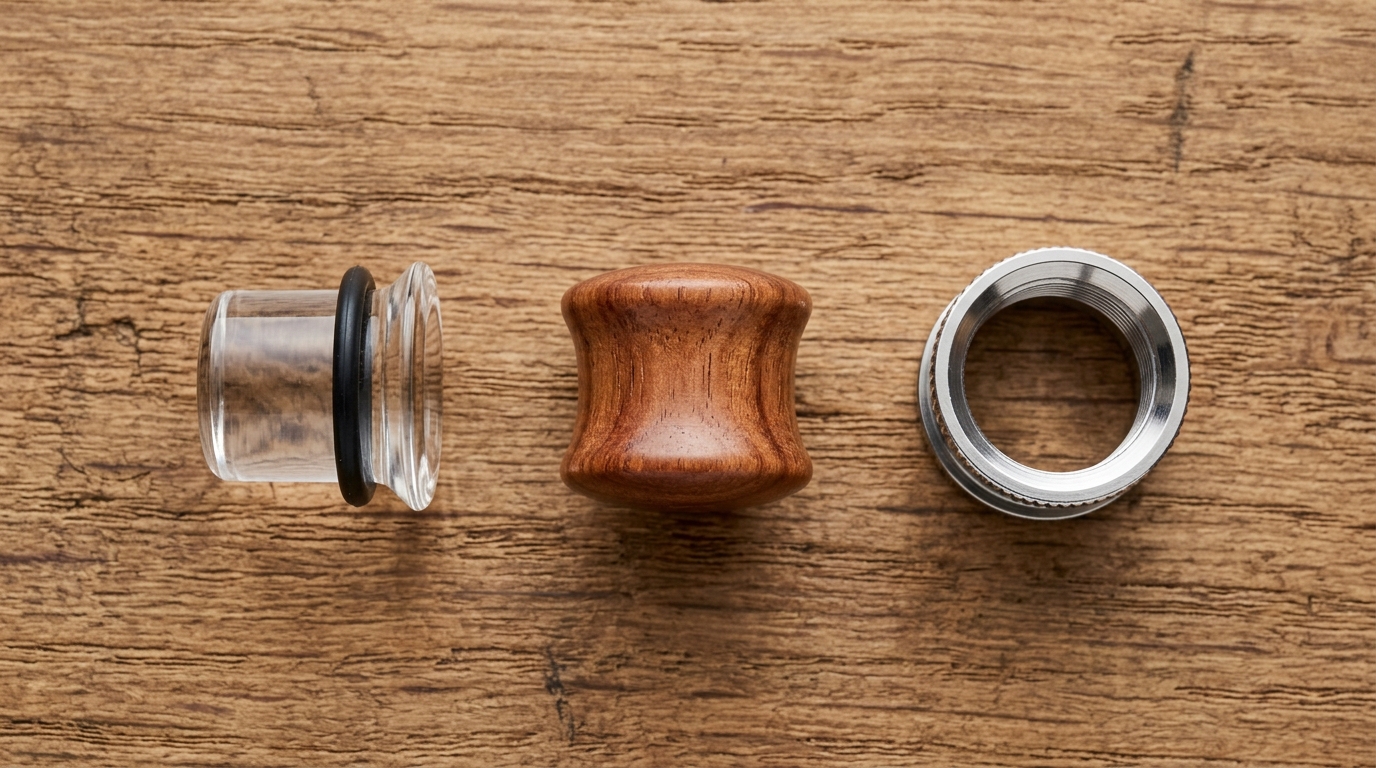
A single-flare plug has one fixed front flare and a straight wearable shaft. An O-ring is usually placed behind the lobe to hold it in position.
Because the wearable shaft stays close to 8 mm, a single-flare design does not require the entire piercing to pass over a second enlarged flare. This makes insertion more straightforward than with many double-flare designs.
Check the wearable length and O-ring groove position. A short shaft can compress a thick lobe, while a very long one may tilt or catch.
Double-Flare Plugs
A double-flare piece has a wider edge on both sides. Its center may measure 8 mm, but the flares can measure 9 mm or more.
Double-flare plugs are intended for established, flexible stretched piercings. The flare should pass through without pain or force. If the lobe is newly stretched, tight, or unable to accommodate the flare, choose another style.
Screw-Fit Tunnels
A screw-fit tunnel separates into two sections. Once the front portion is inserted, the back is screwed into place. This avoids passing a large fixed flare through the piercing.
Threads should align smoothly and should not scrape the tissue. Low-quality threads, sharp edges, or gaps between pieces can cause irritation.
No-Flare Pieces
Non-flared plugs have a straight shaft and are retained by O-rings on both sides. They can provide a consistent diameter, although the O-rings need to fit securely without pressing into the lobe.
Wearable Length Matters at 0G
Gauge answers how thick the jewelry is, but wearable length determines whether the piece fits the thickness of the lobe.
If the wearable area is too short, the flares or O-rings may press into the tissue. Prolonged pressure can leave indentations, restrict comfortable movement, and make cleaning difficult.
If the wearable area is too long, the jewelry may shift from side to side. Extra movement can make heavier pieces less stable and increase snagging.
Lobe thickness varies between people and may change with stretching history, tissue condition, and jewelry weight. A wearable length that fits one person may not suit another at the same 0G diameter. Measure a comfortable existing plug or ask a piercer to assess the lobe. Do not estimate wearable length from the gauge alone.
How to Check Whether a Plug Is Truly 0G
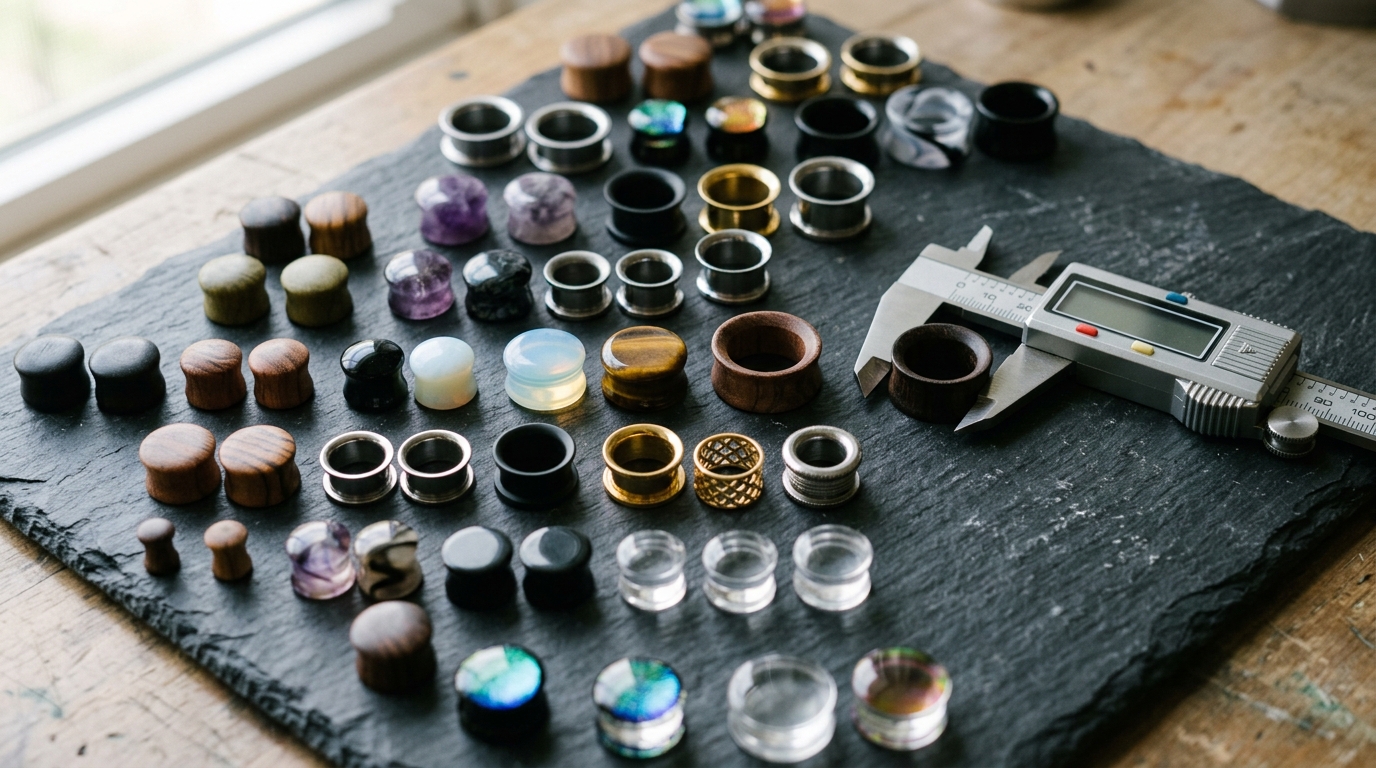
A clean digital caliper is the most useful home tool for checking jewelry diameter. Measure across the straight wearable shaft at its widest point, avoiding the flare.
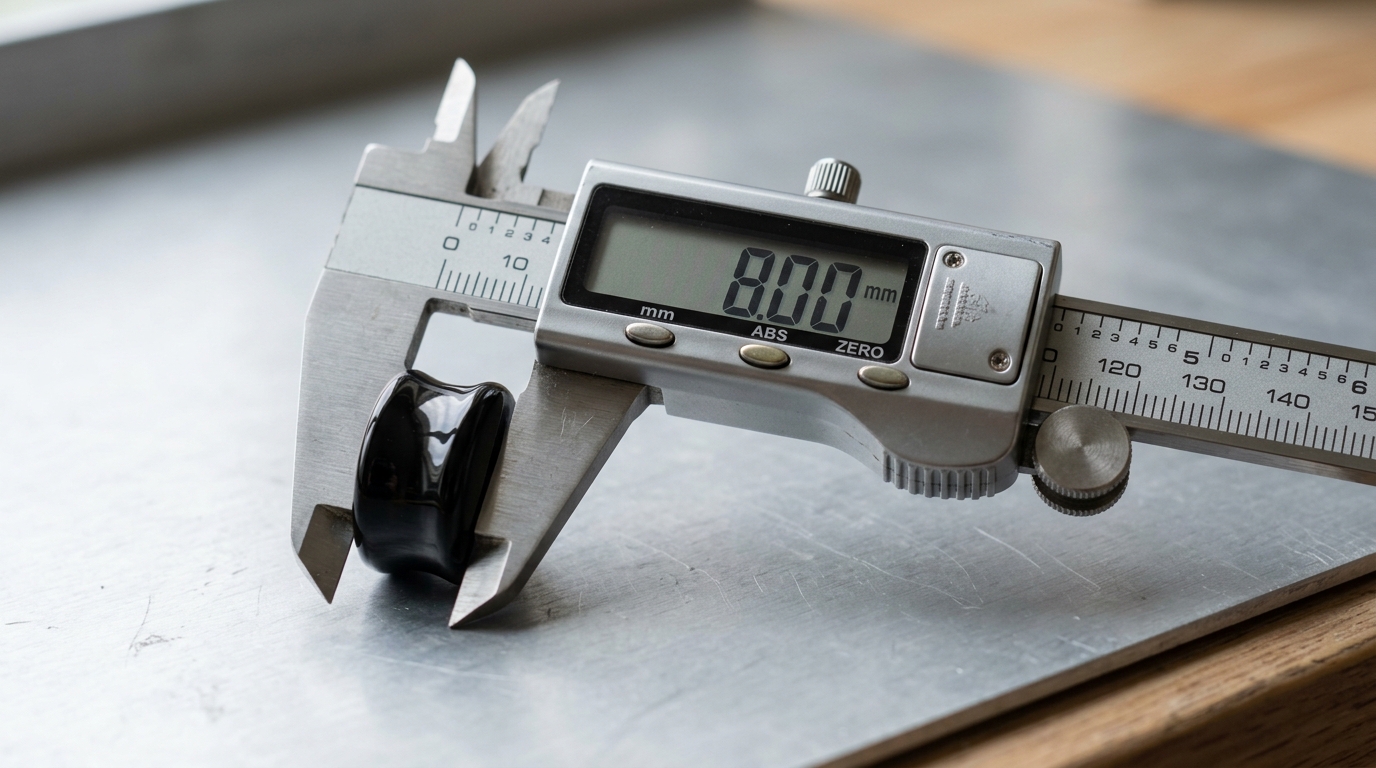
For more reliable results:
- Remove and clean fully healed jewelry.
- Close the caliper gently around the wearable section without forcing it.
- Do not compress soft jewelry (such as silicone) while measuring.
- Read the result in millimeters for highest precision.
- Repeat the measurement from another angle across the circle.
- Confirm that the result is close to 8 mm.
Do not measure across the front face or outside flare. Those areas are supposed to be larger than the wearable diameter.
A gauge wheel may identify common sizes, but it can be less useful for pieces with large flares or unusual shapes. A professional piercer can measure both the jewelry and the lobe when fit is uncertain. Avoid removing jewelry from a fresh, irritated, or recently stretched piercing solely to measure it.
Moving From 2G Toward 0G
The direct step from a common 2G size of 6 mm to 0G at 8 mm is a 2 mm change. Even though the labels appear adjacent on many charts, the physical increase is substantial.
A 1G or 7 mm piece creates a smaller intermediate step:
A stretch should not require pushing through sharp pain or strong resistance. Stop if the tissue bleeds, tears, swells suddenly, or begins turning outward around the back of the piercing.
Do not assume that reaching a certain waiting period means the tissue is ready. Individual healing, elasticity, scar tissue, jewelry quality, and previous damage all matter. A qualified piercer can assess readiness and determine whether an intermediate size is appropriate. This article provides sizing information, not a personalized stretching plan.
Materials and Everyday Wear
An established 0G piercing can accommodate many jewelry styles, but material still affects comfort and care.
Smooth glass and verified implant-quality metals are commonly chosen when accurate sizing and a nonporous surface are priorities. Stone pieces may vary slightly in weight and dimensions. Wood requires different care and should not remain wet for extended periods. Silicone quality varies and soft jewelry can be compressed during measurement.
Heavy plugs, hangers, and ear weights place more force on the lower portion of the lobe. They should not be treated as tools for reaching 0G or as proof that the tissue is ready for a larger size.
Inspect jewelry for chips, scratches, burrs, rough seams, damaged threads, or uneven wearable surfaces before insertion.
Questions About 0G Jewelry
Is 0G exactly 8 mm?
In body jewelry, 0G is conventionally treated as 8 mm. A finished product may vary slightly because of manufacturing tolerances, material, or rounding. Check the seller’s metric specification and measure the wearable shaft when precision matters.
Is 0G the same as 5/16 inch?
They are very close but not mathematically identical. Eight millimeters equals approximately 0.31496 inch, while 5/16 inch equals 0.3125 inch. The fractional label is normally used as a convenient comparison.
Is 0G bigger than 00G?
No. The reverse gauge system makes 00G larger than 0G. Zero gauge is about 8 mm, while double-zero jewelry may be 9 or 10 mm depending on the manufacturer.
Can an 8 mm plug fit an 0G piercing?
Yes, because 8 mm is the nominal diameter associated with 0G. Fit still depends on flare size, wearable length, jewelry shape, manufacturing tolerance, and the condition of the piercing.
Does an 0G double flare measure 8 mm?
The center wearable section should be about 8 mm, but the outer flares will be larger. Check the listed flare diameter before purchasing, especially if the piercing is tight or has limited flexibility.
What size comes directly before 0G?
Many basic charts list 2G, or approximately 6 mm, immediately before 0G. A 1G or 7 mm piece is an important intermediate size that creates a smaller transition.
What comes after 0G?
The next gauge label is 00G, but its metric size is inconsistent. It may refer to 9 or 10 mm. Shop by the exact millimeter measurement rather than the gauge label alone.
Check All Dimensions Before Ordering
The clear answer to 0G in mm is 8 mm, or approximately 0.315 inch. To make that conversion useful, also check the flare diameter, wearable length, jewelry construction, and exact manufacturer specifications. An 8 mm label identifies the wearable thickness, but it cannot guarantee a comfortable fit by itself.
Technical Measurement & Sizing Specialists
Gauge to MM provides calibrated measurement conversion charts and calculation standards for electrical, manufacturing, and body jewelry dimensions.